

Battery Storage on Octopus Go in Pembrokeshire
With Octopus Go offering a low off-peak rate between 00:30 and 05:30, batteries make as much money from arbitrage as they do from solar self-consumption. Here's how we size Fox ESS and Sigenergy systems for Pembrokeshire households.
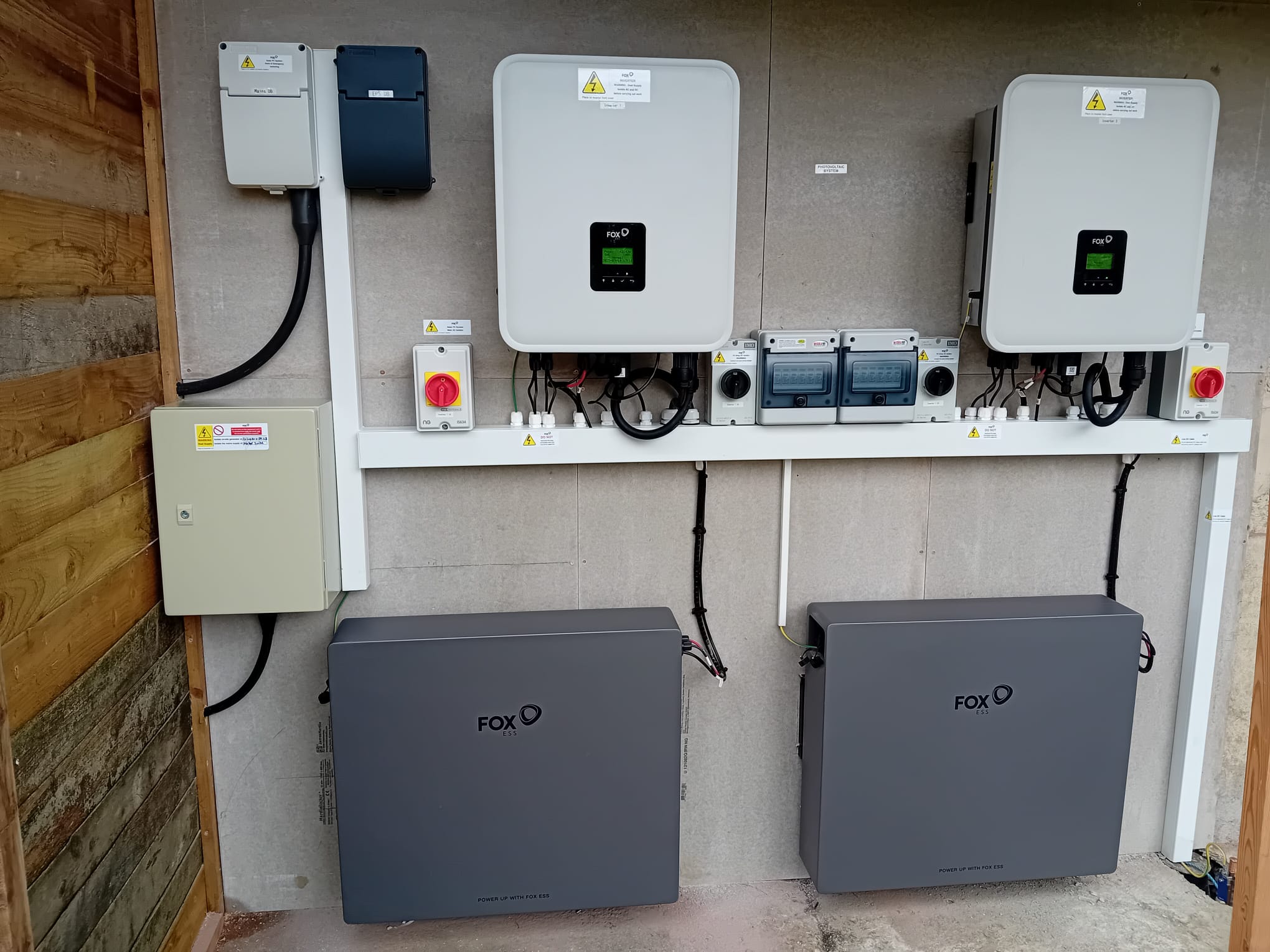
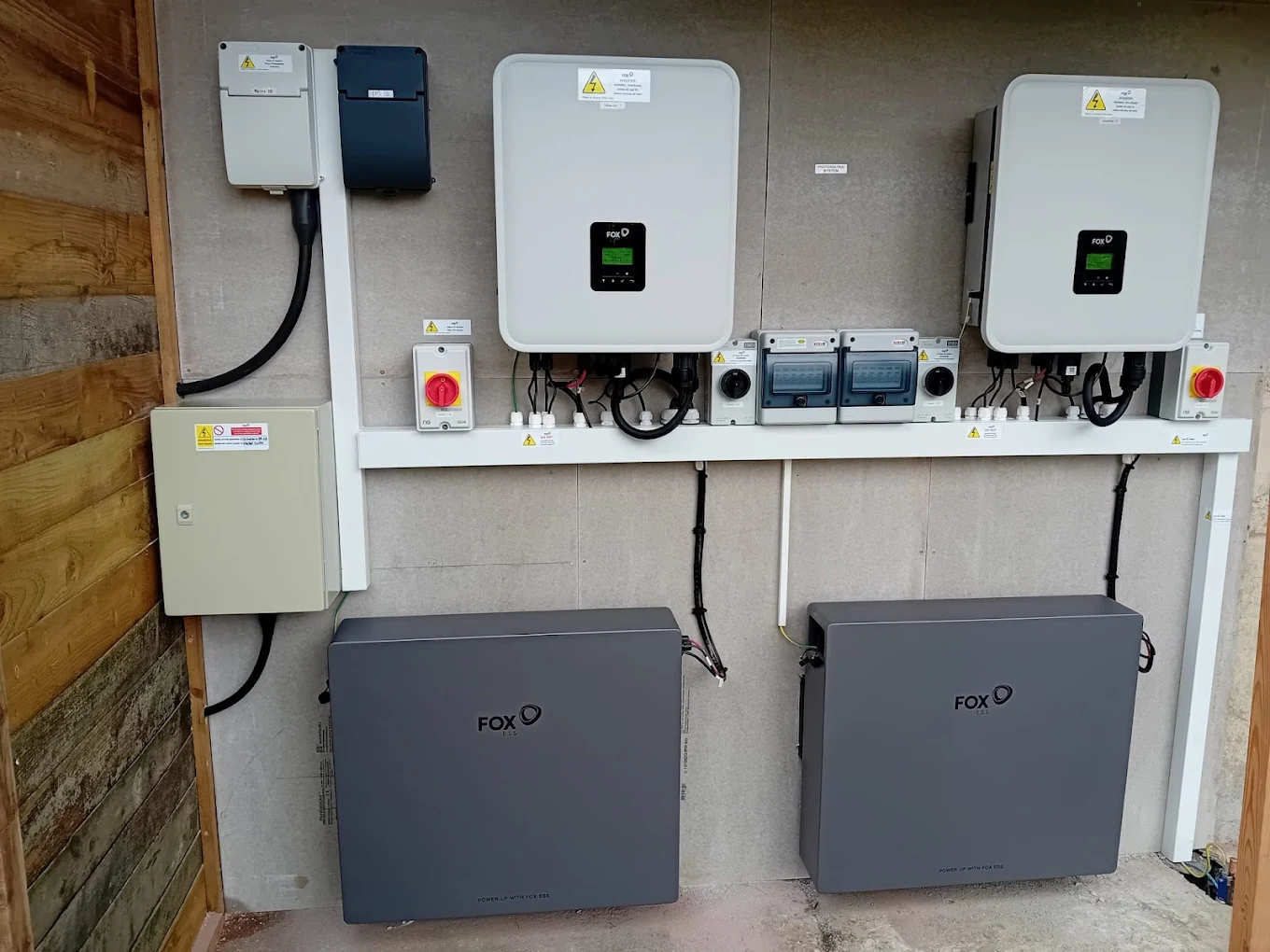
Most Pembrokeshire battery quotes still treat storage purely as a solar self-consumption tool. That misses half the value. Octopus Go pairs a 5-hour off-peak window (00:30–05:30) at 8.5p/kWh with a daytime rate of 27.6p/kWh — significantly above the Ofgem cap (26.11p/kWh, July–September 2026 — resets quarterly). The 19.1p/kWh arbitrage gap means a battery that fully discharges every day saves £488–£1394 a year on arbitrage alone before you factor in solar.
⚠ Rate note: 11 August 2026 (placeholder — verify live at publish against an SA postcode). All arbitrage figures below use these placeholder rates and must be recomputed against the live rate before publishing.
This article covers how to size correctly, which inverter strategy works on the Octopus tariffs, and the real payback we see across Fox ESS EP5/EP11 and Sigenergy systems in Pembrokeshire.
The Octopus Go Window — How Much Can You Charge?
Octopus Go gives you 5 hours of cheap import. Your battery's ability to use that window is limited by its charge power, not just its capacity. A 10 kWh battery with a 3 kW charge limit can only soak up 15 kWh in the 5-hour window — your usable capacity is capped.
| Battery | Capacity | Charge power | 5-hr fill | Suitability for Go |
|---|---|---|---|---|
| Fox ESS EP5 | 5.18 kWh | 3.0 kW | Full charge in 1.7 h | Excellent |
| Fox ESS EP11 | 10.36 kWh | 3.7 kW | Full charge in 2.8 h | Excellent |
| Sigenergy SigenStor BAT 8.0 (with EC 6.0 SP controller) | 7.8 kWh usable per module | 4.0 kW (single module); grid charging capped at ~6 kW by the EC 6.0 SP for larger stacks | ~2.0 h (single module); a 3 × 8 kWh stack (23.4 kWh usable) fills in ~4 h at 6 kW — still within the Go window | Best — stack up to 6 modules per controller (e.g. 3 × 8 kWh ≈ 24 kWh total) |
| 2× Fox EP11 stacked | 20.7 kWh | 3.7 kW (single inverter) | ~18.5 kWh | Good if you add 2nd inverter |
Sizing for Real Pembrokeshire Households
Right-sizing depends on daily kWh demand outside the off-peak window. Three common Pembrokeshire profiles:
Couple, no heat pump
- • Daily peak-time use: 6–8 kWh
- • Recommendation: Fox ESS EP5
- • Illustrative Year-1 saving: ~£488
- Formula: ~7 kWh/day × (27.6p − 8.5p) × 365 ÷ 100
- Verify Go rates live (SA postcode) at publish — see rate note above.
Family, ASHP, EV occasional
- • Daily peak-time use: 12–18 kWh
- • Recommendation: Fox EP11 or SigenStor BAT 10.0 (8.76 kWh usable)
- • Illustrative Year-1 saving: ~£683 (EP11 usable ~9.8 kWh/day)
- Formula: ~9.8 kWh/day × (27.6p − 8.5p) × 365 ÷ 100
- Verify Go rates live (SA postcode) at publish — see rate note above.
Large family + ASHP + EV daily
- • Daily peak-time use: 22–30 kWh
- • Recommendation: SigenStor 3 × BAT 8.0 stack (24.18 kWh total; grid charging ~6 kW via EC 6.0 SP) or 2× Fox EP11
- • Illustrative Year-1 saving: ~£1394
- Formula: ~20 kWh/day × (27.6p − 8.5p) × 365 ÷ 100
- Verify Go rates live (SA postcode) at publish — see rate note above.
Fox ESS EP5/EP11 vs Sigenergy SigenStor
| Feature | Fox ESS EP5/EP11 | Sigenergy SigenStor (BAT 5.0/8.0/10.0 modules) |
|---|---|---|
| Battery chemistry | LFP | LFP |
| Round-trip efficiency | 95% | 96.5% |
| Stackable | Up to 4 modules | Up to 6 modules per controller (48 kWh with BAT 8.0) |
| Inverter integration | Separate Fox ESS hybrid (H1 G2) or AC-coupled (AC1 G2) inverter | Integrated Sigen EC controller (3.0–6.0 kW single-phase) |
| Backup / EPS | Yes (whole-home with kit) | Yes (built-in 10 ms transfer) |
| App / control | FoxCloud + 3rd party | mySigen with native Octopus integration |
| Warranty | 10 years | 10 years (15 with annual check) |
| Best for | Retrofit, modular growth, value | All-in-one, EV charger integration, premium |
Worked Arbitrage Maths — Fox EP11 + 6 kW Solar
Daily Profile (Family, Pembrokeshire SA62)
- • Peak-time consumption: 14 kWh/day
- • Solar share to battery (April–Sept avg): 4.2 kWh/day
- • Off-peak top-up needed: 9.8 kWh × 8.5p = 83p (~£0.83)
- • Avoided peak import: 9.8 kWh × 27.6p = ~£2.70
- • Daily benefit: 9.8 kWh × (27.6p − 8.5p) = ~£1.87
- • Formula: 9.8 kWh × (Go day rate − Go off-peak rate) × 365 = annual saving
- • Annual benefit (battery alone): ~£683 at placeholder rates (11 August 2026 (placeholder — verify live at publish against an SA postcode))
- • Plus solar export on a flat SEG tariff (~12–15p/kWh (checked Aug 2026)): roughly £380–£480/yr depending on the tariff secured
Watch-outs
- • Octopus Go EV-only Cosy and Intelligent Octopus Go have different terms — check eligibility before sizing.
- • If you have an EV, consider Intelligent Octopus Go — the smart-charge window expands as the car needs it, often giving you 6+ hours.
- • Heat pump owners should check whether Octopus Cosy (3 cheap windows totalling 8 hours: 04:00–07:00, 13:00–16:00, 22:00–00:00 at ~13p/kWh, checked Aug 2026) suits better — it often does.
- • Most hybrid inverters need a firmware setting for forced-charge windows. Fox uses "Force Charge", Sigenergy uses native Octopus tariff sync.
- • 0% VAT applies to retrofit batteries since Feb 2024 — make sure your installer has it on the invoice.
Tariff Comparison for Pembrokeshire Households
Octopus Go isn't the only smart tariff worth considering. Our preferred tariff depends on your driving and heating profile — here's the head-to-head:
| Tariff | Off-peak rate | Peak rate | Off-peak window | Best for |
|---|---|---|---|---|
| Octopus Go | ~8.5 p/kWh* | ~27.6 p/kWh* | 00:30–05:30 (5 h) | EV + battery, fixed window |
| Intelligent Octopus Go | ~8.5 p/kWh* | ~27.6 p/kWh* | 23:30–05:30 (6 h, dynamic) | Compatible EV/charger only |
| Cosy Octopus | ~13 p/kWh | Peak 16:00–19:00 (weekdays) | 04:00–07:00 + 13:00–16:00 + 22:00–00:00 | Heat-pump heavy, no EV |
| Octopus Agile | Variable (avg 17 p) | Up to 100 p | Half-hourly dynamic | Active managers, optimisers |
| Octopus Flux (closed to new customers, Mar 2026) | Existing customers only — new solar+battery customers should consider Outgoing (flat ~12–15p export) or Intelligent Flux where compatible | Existing Flux customers | ||
*Octopus Go rates are placeholders checked 11 Aug 2026 — verify live against an SA postcode at octopus.energy on publish day. Cosy rate ~13p/kWh checked Aug 2026 — verify live at publish. All tariff rates subject to change.
Smart Charge Logic with Fox ESS / Sigenergy
A battery only saves you money if it charges at the right time and discharges at the right time. Both Fox ESS and Sigenergy have time-of-use (TOU) and self-consumption modes — getting the configuration right is what turns hardware into savings.
Octopus Go scenario
Charge window: 00:30–05:30 to 100% SOC at off-peak rate.
Discharge window: 05:30–22:00 with PV self-consumption priority.
Reserve: 10% SOC ringfenced for power-cut backup.
Cosy Octopus scenario
Charge windows: 04:00–07:00 + 13:00–16:00 + 22:00–00:00 (~13p/kWh, checked Aug 2026) to 100%.
Discharge: Weekday peak 16:00–19:00 and morning demand.
Mid-rate: Pause charging, run from PV/battery.
Flux scenario (existing customers only)
Note: Octopus Flux closed to new customers in March 2026.
Existing Flux customers: charge overnight window, force-discharge 16:00–19:00 at peak export.
New customers: use Outgoing (flat ~12–15p export) or Intelligent Flux where the inverter is compatible.
Hybrid (PV+grid) scenario
PV first: Charge from PV through the day.
Top-up: Grid charge to 80% if PV insufficient by 23:30.
Discharge: Self-consumption all day, no export forcing.
EPS / Backup Configuration
Pembrokeshire suffers more storm-related power cuts than the UK average — 4–8 hours per year is typical in rural postcodes. Both Fox ESS EP-series and Sigenergy 10kWh have Emergency Power Supply (EPS) outputs. Whether you wire whole-home or essential-circuit-only depends on load and budget.
| EPS option | Cost uplift | What it powers | Limits |
|---|---|---|---|
| EPS socket only | £0 (built-in) | Plug-in extension lead — fridge, lights, broadband | Manual switching, ~16 A max |
| Essential-circuit ATS | +£600–£950 | Lights + sockets + boiler/ASHP control board | Selected circuits only |
| Whole-home backup (Fox ESS EP-Master) | +£1,400–£2,200 | All circuits, including ASHP and EV charger (rate-limited) | Inverter peak limits apply |
Battery+Tariff FAQ
How big a battery do I need on Octopus Go?
Match the battery (in kWh) to your daily peak-rate consumption. A typical 3-bed Pembrokeshire home consumes 8–12 kWh between 05:30 and 23:30 — so 10 kWh of usable storage covers a full day in winter. The Fox ESS EP11 (10.36 kWh nominal, ~9.8 kWh usable) or SigenStor BAT 10.0 (9.04 kWh total, 8.76 kWh usable) sit right in this sweet spot.
Can I switch off Octopus Go in summer?
Yes — many solar+battery customers switch to an export-focused tariff from May to September to monetise PV exports, then back to Go for winter. Note that Octopus Flux closed to new customers in March 2026 — new customers should look at Outgoing (flat ~12–15p export) or Intelligent Flux where compatible. Switching is free and takes effect within 2 weeks.
Does the battery wear out faster on Octopus Go?
Slightly. Daily 100% to 10% cycles use ~330 cycles/year, vs 220 for solar-only self-consumption. Both Fox ESS and Sigenergy LFP cells are rated 6,000+ cycles to 80% capacity — that's 18+ years either way.
What about heat pump charging during off-peak?
For heat-pump-heavy households, schedule the heat pump to do most of its work during off-peak (e.g. heat the cylinder to 50°C at 02:00, run setback heating until 05:30). Combined with battery charge, that's the lowest-cost setup.
Can the battery export to the grid?
Yes — both Fox ESS and Sigenergy support force-discharge to grid at scheduled times. Existing Octopus Flux customers earn the peak export rate during peak windows this way (Flux closed to new customers in March 2026 — new customers should consider Outgoing or Intelligent Flux where compatible). We program this into commissioning if your tariff supports it.
Configure a Battery for Your Tariff
We model real consumption against the Octopus tariff you're on (or planning to switch to) before quoting, so the battery is sized to your actual daily kWh — not a guess.